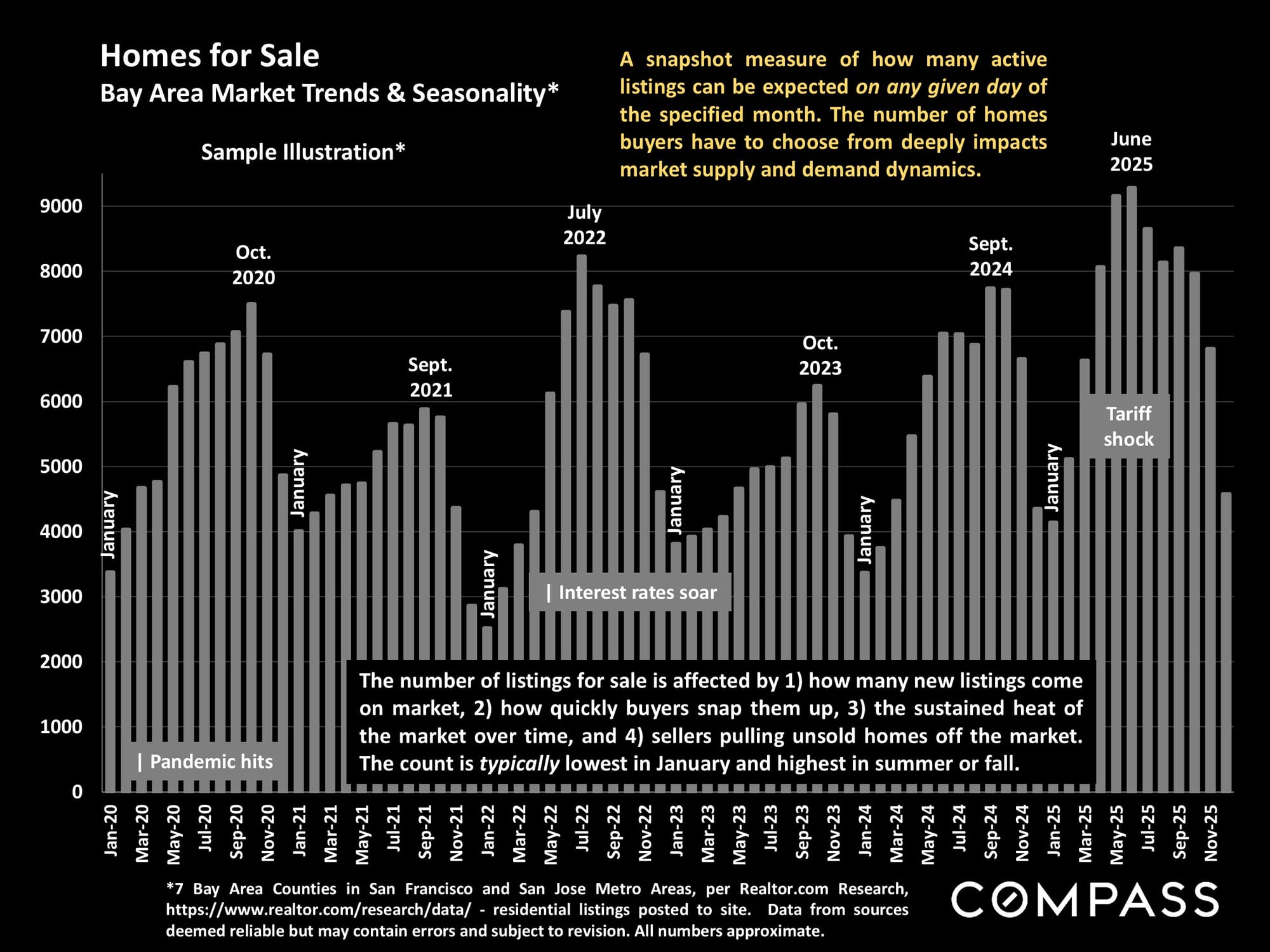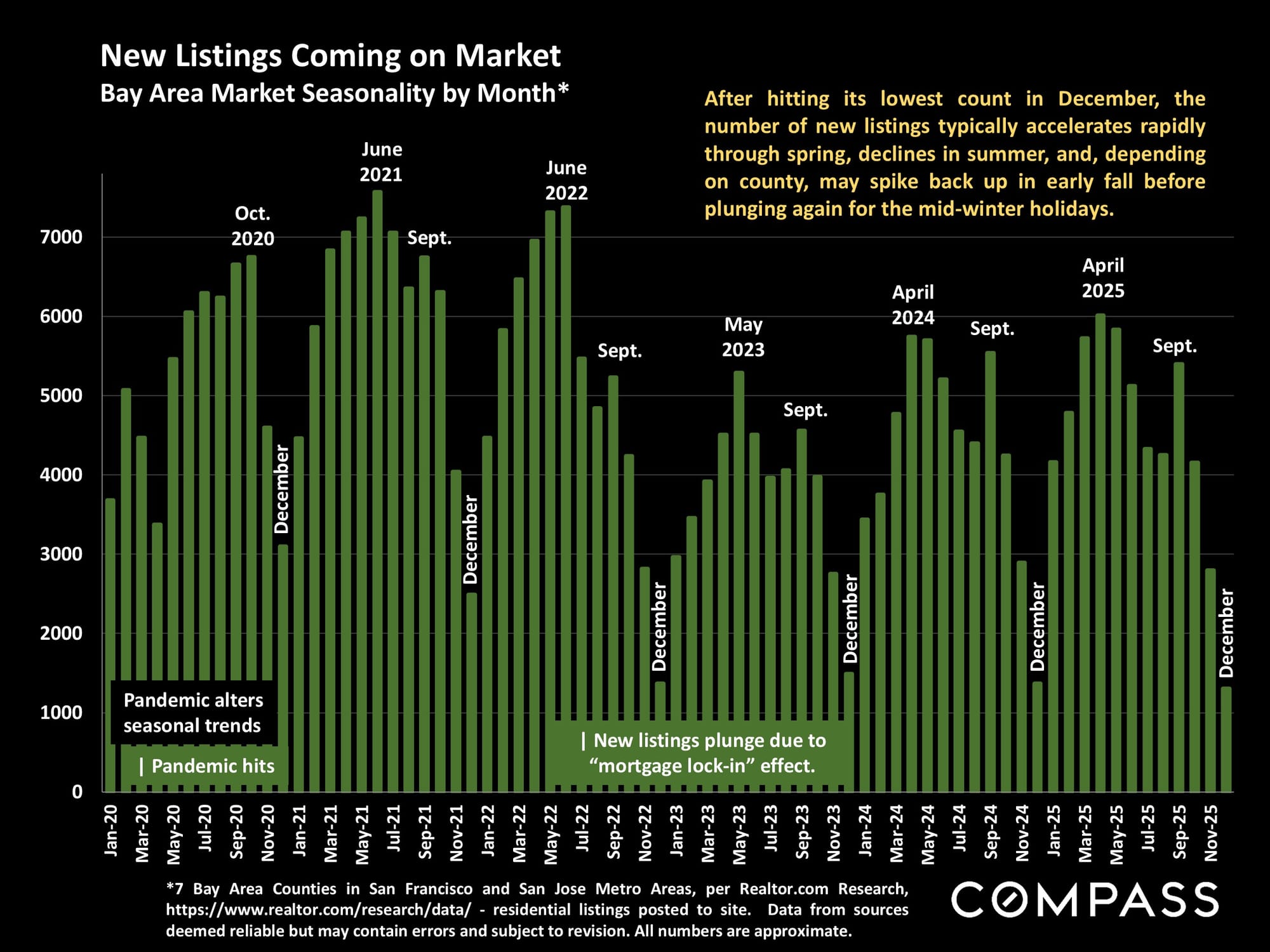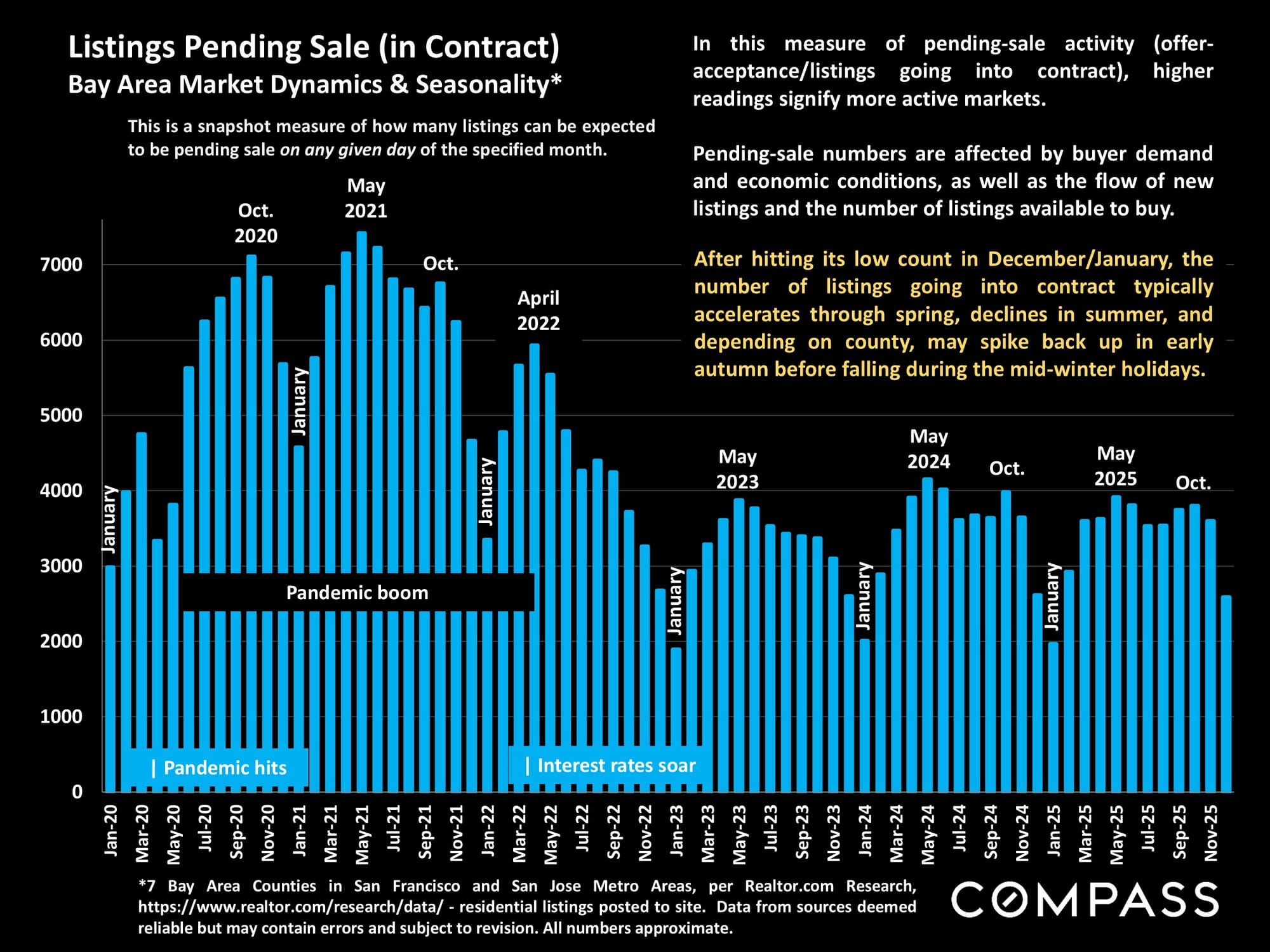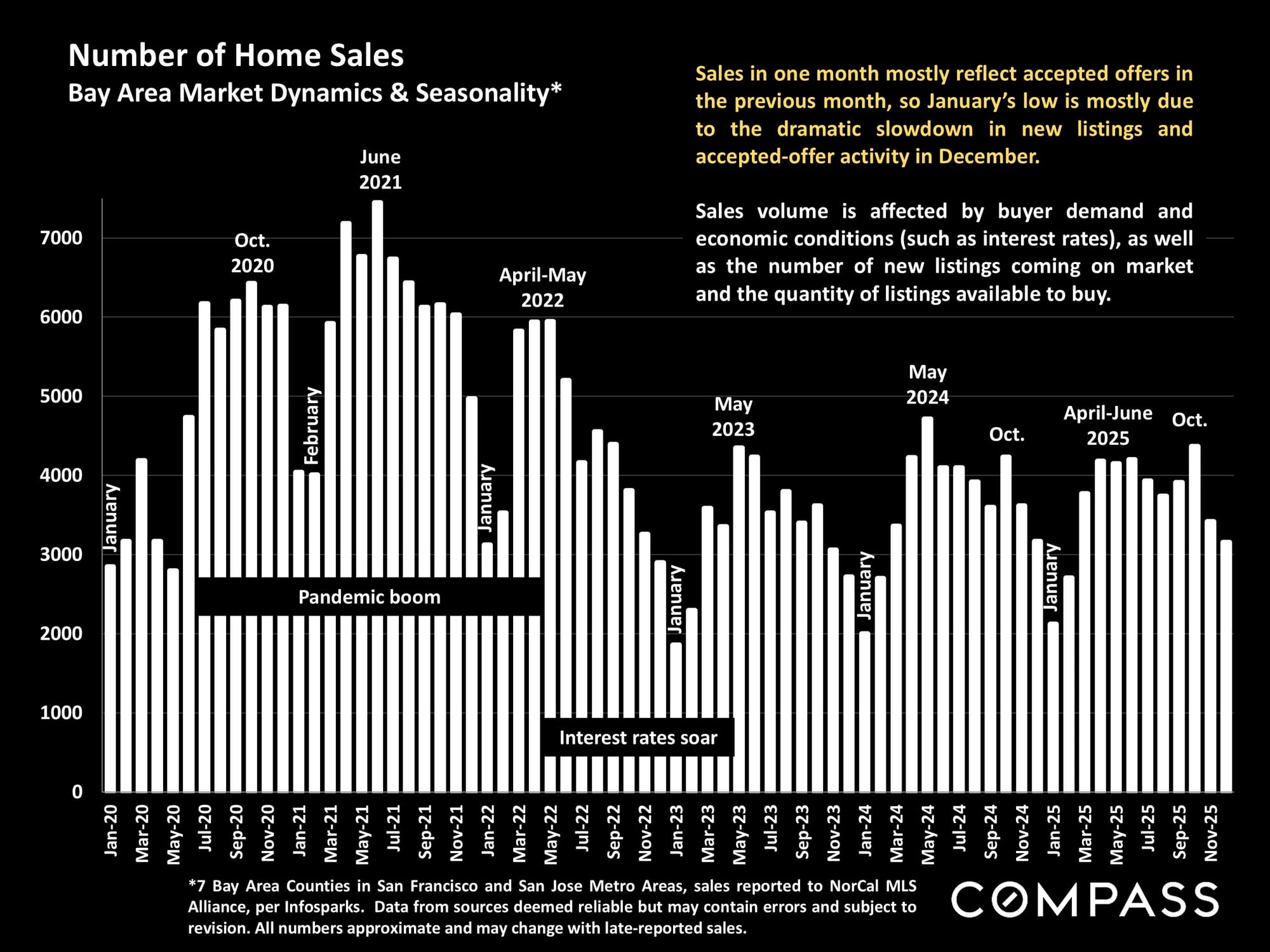

Thanks to the amazing Compass stats team for this information, standard disclaimers apply.
Home Sales Price Trends in Bay Area, 2018 - Present
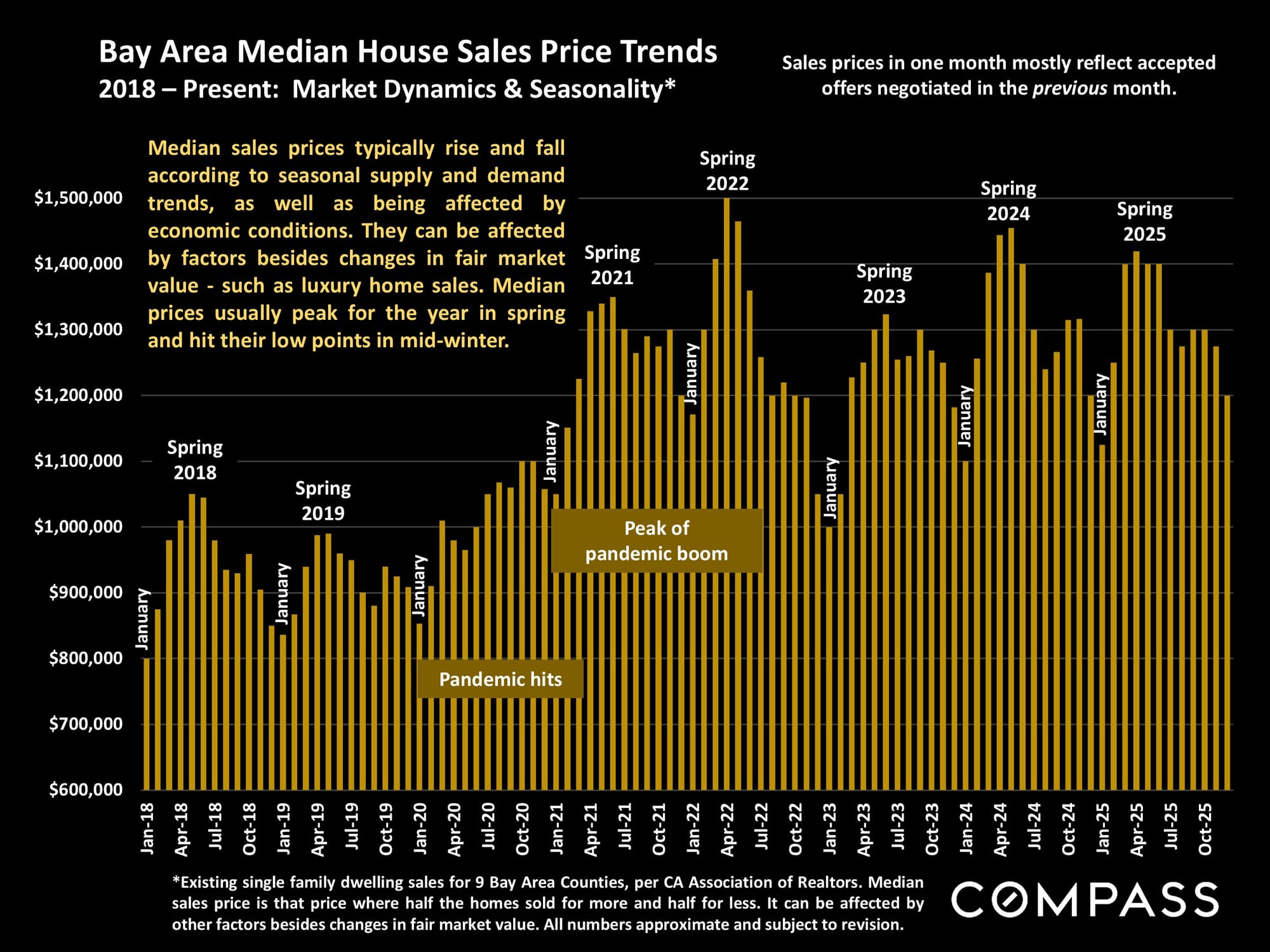
In any year , sales prices tend to hit their highest number of the year in the Spring market cycle (roughly late February to the end of June).
Market conditions are determined by the balance (or imbalance) between buyer demand and the supply of homes for sale. When demand exceeds supply, buyers compete for listings, and the market heats up: Homes sell faster, and multiple offers and bidding wars become common, pushing prices higher. When the supply of listings exceeds demand, sellers compete for buyers, and market conditions cool: Time on market lengthens, overbidding plunges, buyers negotiate more aggressively, and prices flatten or decline.
The balance between supply and demand is continually shifting, sometimes subtly and sometimes dramatically, due to a number of considerations, including market seasonality.
There are many factors underlying the dynamics of supply and demand: Interest rates, financial markets, employment, inflation, consumer confidence, housing affordability, population migration and changing demographics, the frequency at which homeowners sell, the impact of investors buying up homes, new-home construction, tax law, local and national politics, economic booms and crashes, international conflict, natural disasters, the cost of insurance, and so on. These factors can change slowly and gradually or suddenly and dramatically, swinging the market in either positive or negative directions for shorter or longer periods.
After new listings first come on market, there is typically at least a 1 to 3 week interval before they go into contract to allow for the marketing and showing period.
After an offer is negotiated and accepted, 3 to 6 weeks normally pass before the sale closes due to the escrow, due diligence and financing processes.
Closed sales, and the statistics based on closed sales, mostly reflect market conditions in the prior month.
San Francisco's Two Sales Seasons: Spring and Fall
The San Francisco real estate market has two main seasons for new listing inventory: Spring and Fall. Spring runs roughly late February to the end of June while Fall begins the weekend after Labor Day and runs roughly through the first week of November.
A common dynamic early in the new year is for buyers to jump back into the market faster than sellers with new listings. This disparity of increasing demand versus an inadequate supply of listings can continue all the way through the spring, often making these months the most heated selling season of the year.
When summer begins, demand usually softens with vacations and school holidays, just as the number of active listings normally hits its annual high point. However, markets with large second-home markets can see strong demand during their main tourism seasons.
Economic conditions – such as changes in interest rates and stock markets – can override or super-charge seasonal effects. Each sale reflects a unique combination of the condition and circumstances of the home, local market dynamics, and the specific period in which it is listed. This report focuses on the broad effects of seasonality on San Francisco Bay Area supply and demand dynamics, as illustrated by a wide range of standard indicators.